Solution — home and office
Power strips and fire risk: understand it and protect yourself
Overload, loose contact, overheating charger, dust: the power strip concentrates every electrical risk in the room, often hidden behind furniture. Here’s why it catches fire, good habits, and how to automatically put out a fire that starts there.
≈ 250,000
home fires per year in France
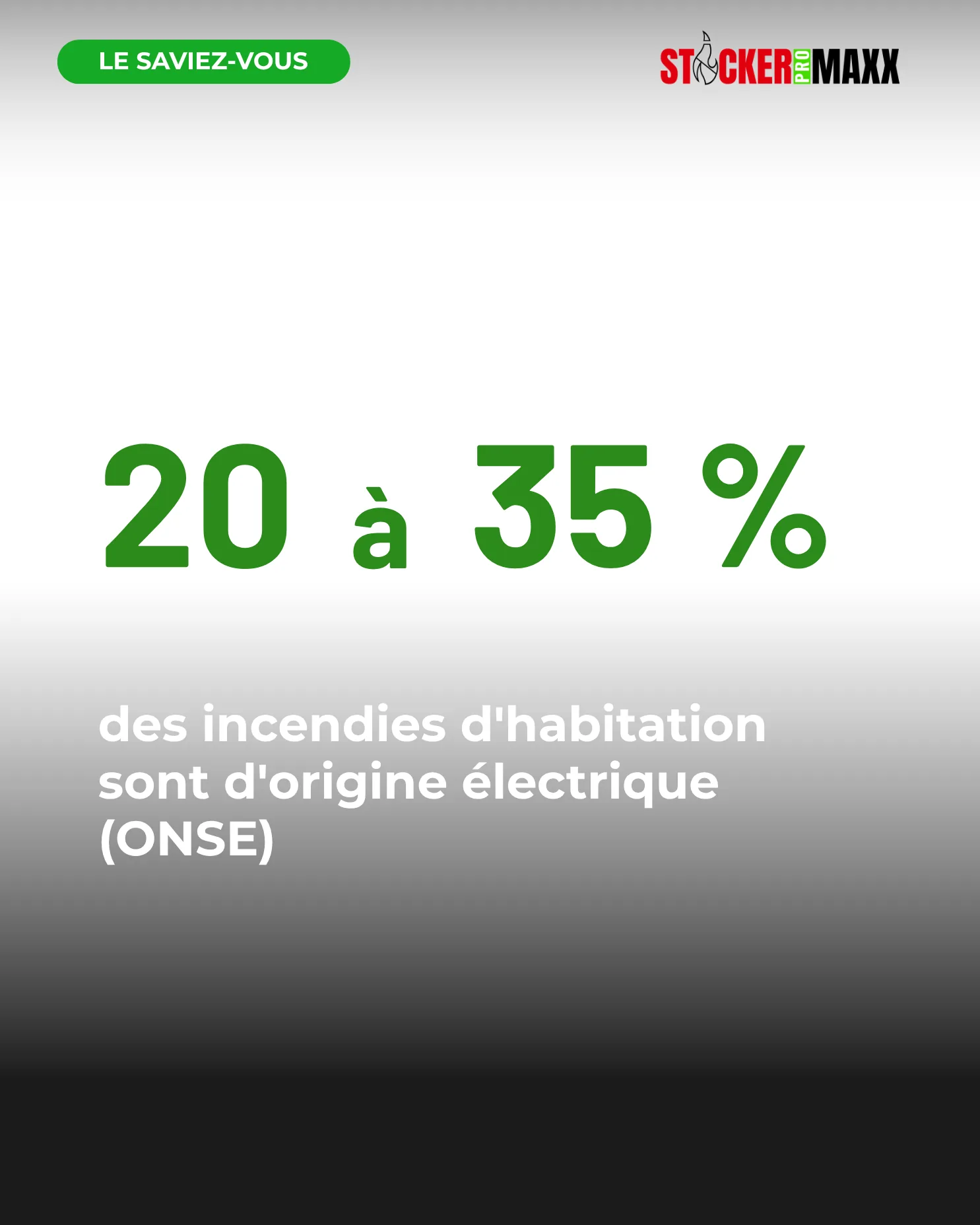
20 to 35%
electrical in origin
€14,000
average cost of a fire claim
Sources: Matmut based on ONSE data; France Assureurs 2025.
The causes
Why power strips catch fire
Overload
Space heater, kettle, hair dryer: adding up wattages beyond what the power strip and wall outlet can handle heats up the contacts and cables.
Loose contact
A half-inserted plug or a worn outlet creates a local hot spot. It heats for hours without tripping the breaker, because the current stays normal.
The surroundings
Dust, a cord crushed under furniture, daisy-chained power strips, cheap chargers that run hot, curtains or papers nearby: all aggravating factors.
What the breaker can’t see
Cutting the power isn’t putting out the fire
Breakers and RCDs protect against overcurrent and current leakage. A hot spot on a bad contact can heat up without exceeding the rated current: nothing trips. And a power strip with a surge protector or switch can’t put out a flame either.
A smoke detector alerts you; it doesn’t put anything out. If no one is there, the fire has time to reach the furniture and then the room.
Fire spreading in the room? Get out, close the door behind you and call 112 (or your local emergency number). Never throw water on a live electrical appliance.
Good habits
Using a power strip safely
- Check the power strip’s maximum rating and add up the wattage of the devices plugged in
- Never plug one power strip into another
- Keep a wall outlet for appliances that heat (heater, kettle, oven)
- Push plugs all the way in, and replace any power strip that gets hot, turns black or feels loose
- Leave it in the open: not under a rug, a cushion or behind a curtain
- Dust regularly and choose CE-marked chargers from known brands
The StickerProMaxx solution
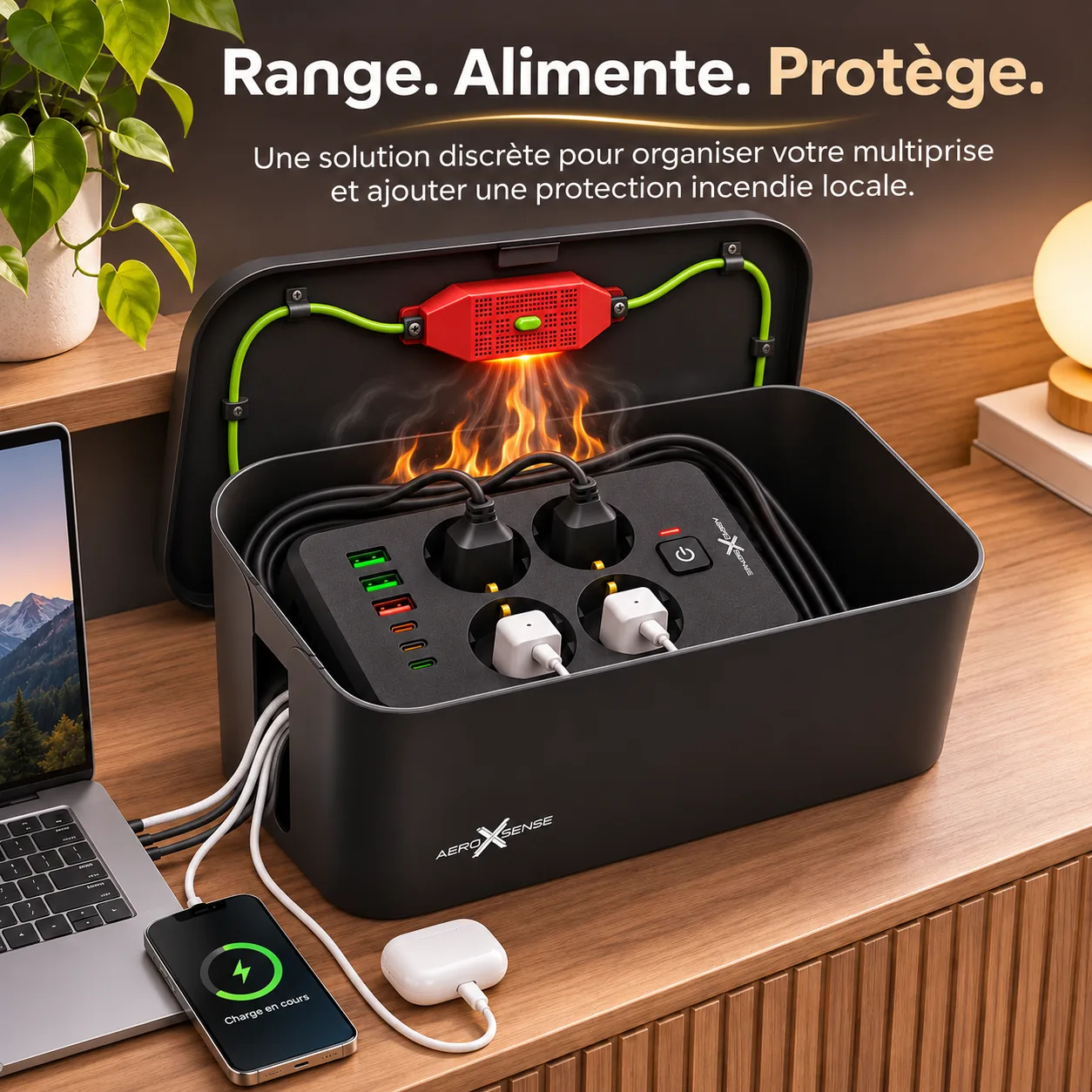
COREVOLT: the power strip that puts out its own fire
We combined a European 4-outlet power strip with 3 USB-A and 3 USB-C ports (3680 W maximum, CE marked) with a fire-resistant box and an automatic extinguishing generator. If a fire starts in the box, the heat triggers the generator and the aerosol puts it out on the spot, with no battery, no electricity and no intervention.
- Automatic extinguishing at the source, even when you’re away
- Cables and chargers tidied away, less dust
- Ready to use, no electrician or tools needed
Frequently asked questions
Does a power strip with a switch or surge protector protect against fire?
It protects against power surges or lets you cut the power, but it doesn’t put out a flame that starts in a contact or a charger.
How many devices can I plug into a power strip?
It depends on their combined wattage: it must not exceed the maximum rating shown on the power strip. Appliances that heat should be plugged directly into a wall outlet.
Is my electrical panel at risk too?
Yes, it’s the other common starting point for electrical fires. See Protect your home electrical panel.